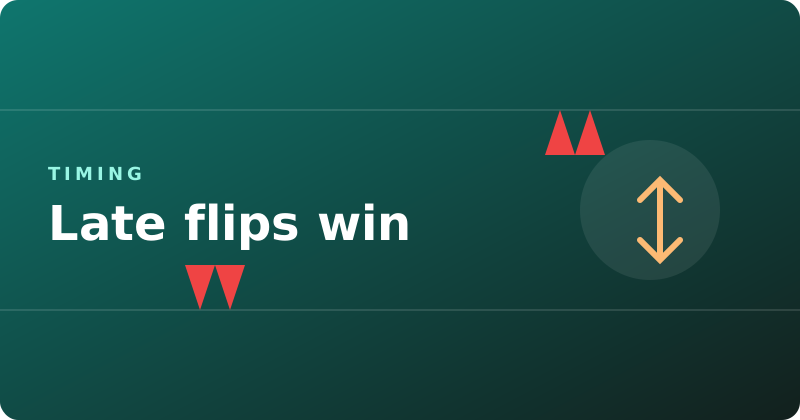
Article 1: Timing beats speed in every GSwitch game
Most new players fail because they flip early. Spikes look dangerous, so they switch the moment a hazard appears—then land on the opposite danger line. The better habit is to hold your surface until the last safe frame, then flip into the clear lane.
Train this with a simple drill: pick one spike strip and restart until you can flip at the edge without guessing. When doubt appears, prefer a late flip. In G-Switch 3 especially, late timing is often the difference between a clean pass and a ceiling spike.
- Watch the hazard edge, not the middle of the danger zone.
- Count a quiet beat before flipping on long spike rows.
- Restart immediately—short loops build timing faster.